Retail Track Dataset for the VAND 4.0 Challenge


About Kaputt 2
Kaputt 2 is the next iteration of the Kaputt large-scale visual defect detection dataset, designed specifically for the Retail Track of the VAND 4.0 Challenge at CVPR 2026. To learn more about the original Kaputt dataset, the underlying research, and the paper, please visit the main Kaputt website.
The VAND 4.0 Challenge
The Visual Anomaly and Novelty Detection (VAND) 4th Edition workshop challenge at CVPR 2026 aims to showcase current progress in anomaly detection across practical settings while addressing critical issues in the field. Despite promising results from previous years, there remains significant room for improvement in developing robust and generalizable anomaly detection models for industrial use cases.
The challenge hosts two individual tracks:
- Retail Track: Kaputt 2 this dataset
- Industrial Track: MVTec AD 2
Participants can choose a single track or enter both with separate submissions. Key outcomes and winners will be presented at the VAND 4.0 Workshop.
The Kaputt 2 Dataset
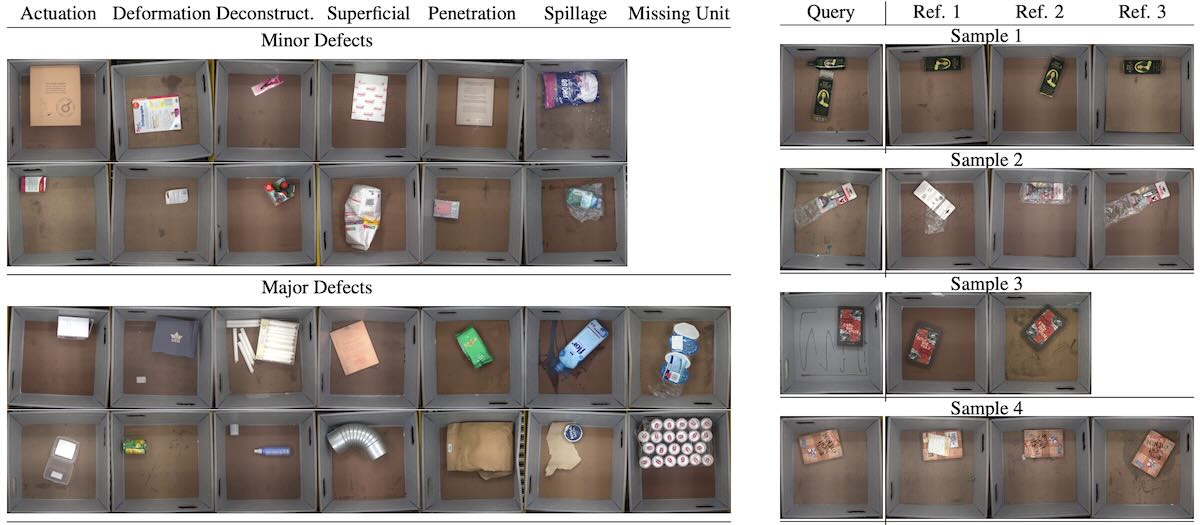
Sample images from the Kaputt 2 dataset (placeholder – final teaser coming soon)
Building on the original Kaputt benchmark, Kaputt2 extends the challenge of visual defect detection in retail logistics. The dataset captures the diversity and variability of object pose and appearance that makes anomaly detection in real-world retail settings particularly challenging. State-of-the-art methods that achieve near-perfect scores on existing benchmarks still struggle significantly in this setting.
Kaputt2 is the official dataset for the Retail Track of the VAND 4.0 Challenge. Kaputt2 is a pure test dataset and does not come with any ground truth defect labels. Participants will create AI models to predict solutions to visual defect/anomaly detection problems as presented through this dataset.
Cookie Notice
We use cookies and similar tools (collectively, "cookies") for the purposes described below.
Operational Cookies: We use cookies to provide our services, for example:
- To ensure the functioning of the dataset request form
- To prevent fraudulent activity and automated submissions
- To improve security of our research data access system
Operational cookies cannot be disabled because without them the site would not function properly.
Operational cookies will remain on your browser for up to 13 months from your last visit to our services.
See our Privacy Notice for more information about how we handle your data.